Is this a look of shock, fear, gratefulness, or a mixture of all three? Read on to find out how Eric and I finally cleared into Panama and why I am wearing a life vest on shore.
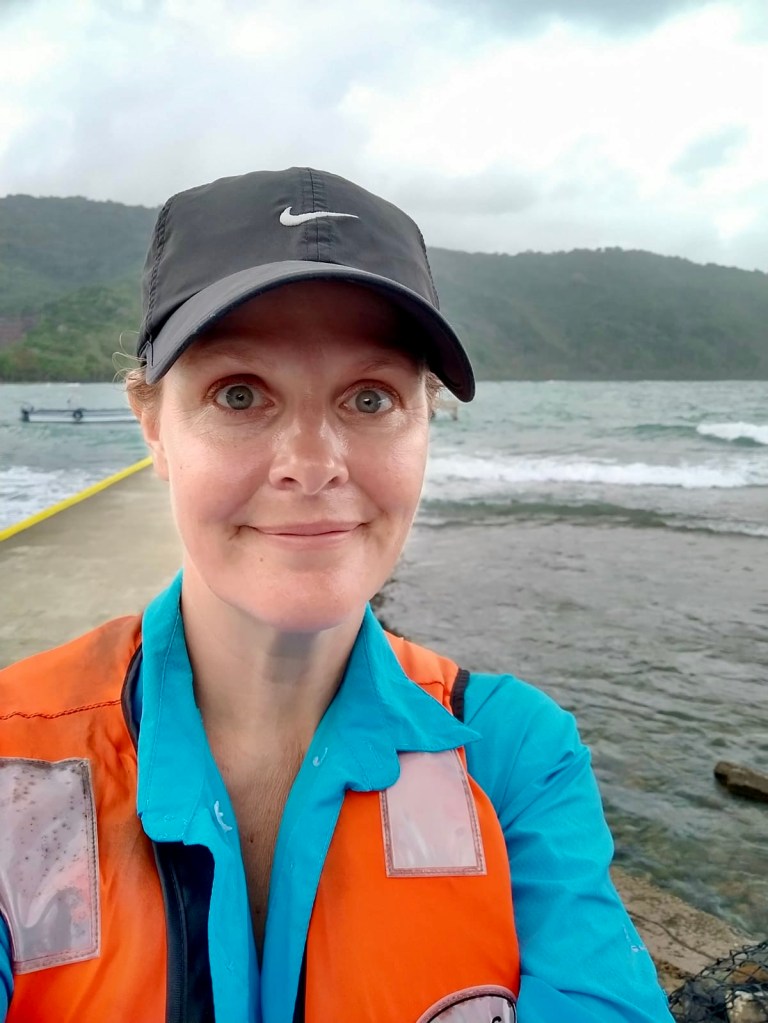
Port Obaldía is the first port on the east coast of Panama, sharing a border with Colombia, where cruisers can clear in when heading south from Santa Marta to the San Blas islands, which we plan to explore soon. We had read this port was not protected from the ocean’s swell and could be difficult to anchor in, but it was the logical stop on our way to the San Blas. Otherwise, we would need to sail past the stunning archipelagoes to Colon and then directly back into the wind to enjoy the turquoise water and white sand beaches. Plus, some other cruisers had recently checked in and had no issues.
We split our trip into two parts to ease our way back on the open water and not tied to a dock – I am glad we did. Both passages had challenging moments primarily due to the large, choppy waves that rocked and rolled the boat during the night, making it hard to sleep. After resting in Tintipán for a few days and celebrating my birthday, we set off on the second leg. We had a glorious day of sailing, flying along, and enjoying every minute of sunlight. Then, as dusk approached and the sky grew dark, the waves and wind increased. We were going fast and had an ETA that put us in Port Obaldía well before sunrise. We tried to slow Oleta down, but the waves would bully us around, so we just accepted we would have to bob around some and wait for light to enter the port.
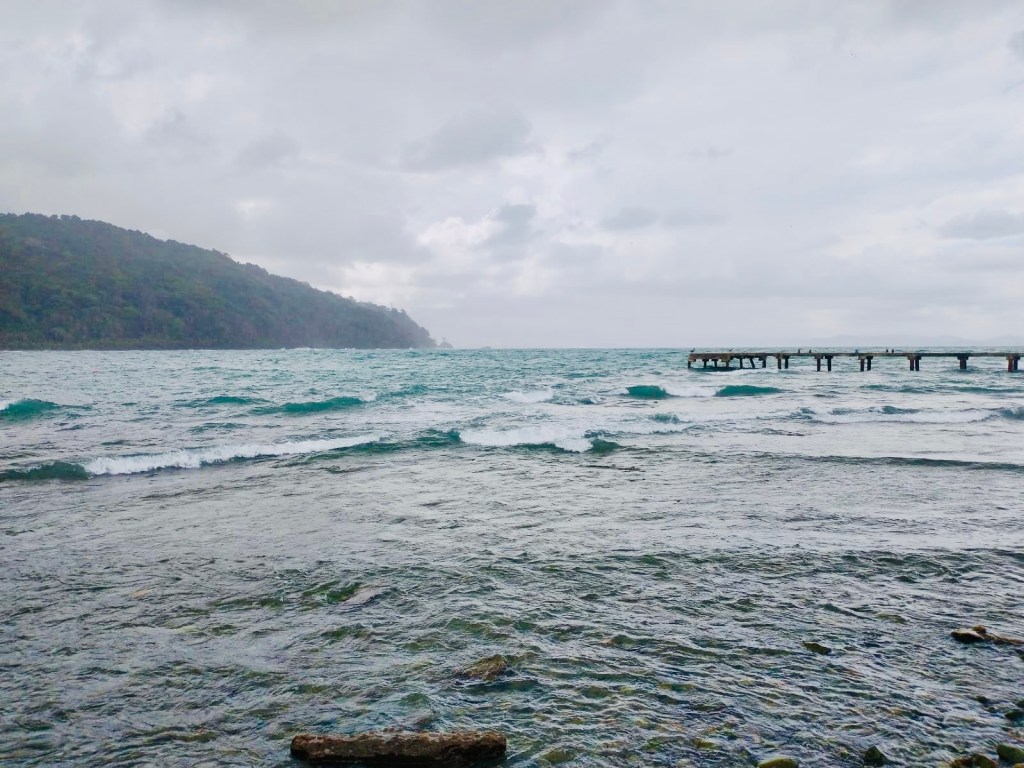
A new day began as we made crisscross patterns out in the ocean for over an hour to stall our entry. We had yet to sleep much on the 22-hour passage. Still, we were both optimistic that we could anchor, set up the dinghy with the motor, go to shore, clear in, and then move to a more protected anchorage by evening. We made our way into the port, and our research was accurate. It was completely exposed to the 5-foot swell that flowed in, a ton of trash, and sargassum (seaweed). We were nervous that some would get wrapped around the prop or stuck in the sea strainer. Anchoring in this port put us very close to shore, so any engine issues could be disastrous.
We anchored successfully and took a break to assess the conditions and our plan to lower the dinghy into the water. In Tintipán, we moved it to the back davits under the arch – thinking this option would be easier than lifting it from the forward deck, which is how we store Turtle (the dinghy) for long passages. The process started well, and we got her into the water relatively smoothly.
However, within a minute, a colossal swell moved Oleta up and down like a crazy seesaw. This action made the dinghy slide under the sugar scoop – risking popping it and pulling aggressively on the arch as we rode the massive waves. Eric quickly added new lines to secure it differently to take pressure off the arch. This helped a bit, and we started to prep the 75-pound engine to attach it to Turtle. The conditions were terrible, but we were determined. Eric made it to the sugar scoop as he held the outboard, and I assisted on the winch to lower or raise it as needed.
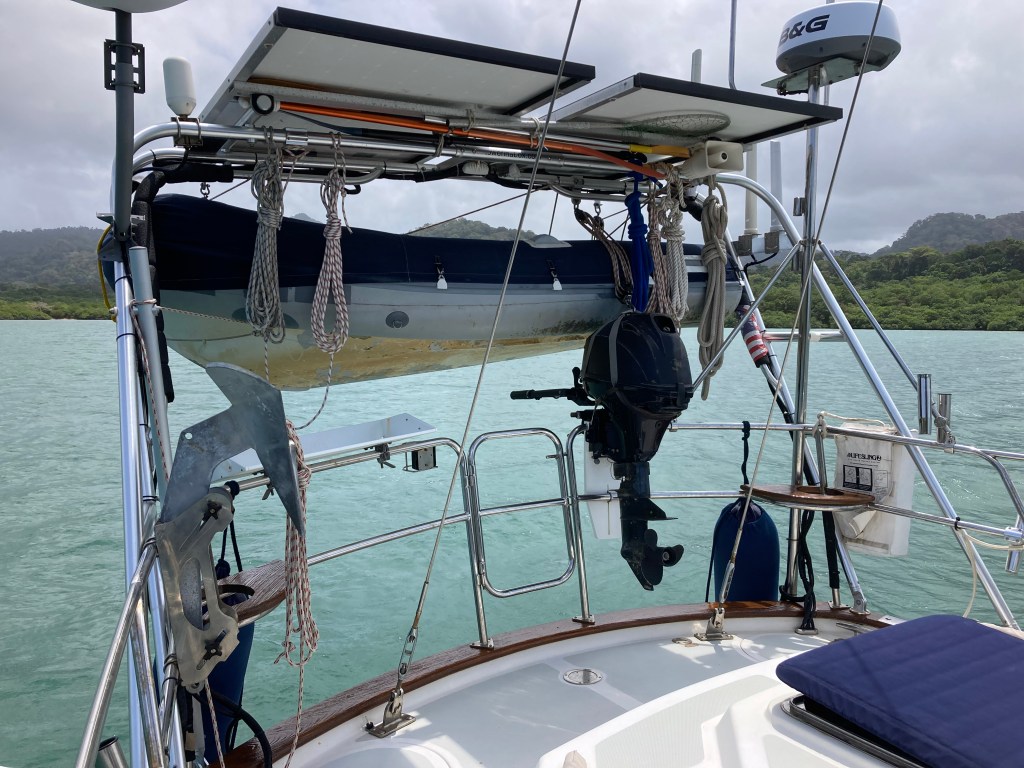
As Eric maneuvered himself and the wild, bucking motor down onto the scoop, a set of large waves came in at once, sending Oleta’s stern above his head and very close to smashing him. Eric yelled for me to tie off the line and take the motor so he could get back on Oleta without hurting himself. It was a close call since Eric losing control of the engine would have sent the massive object spinning like a tether ball, uncontrollably smashing our boat and him.
It is a blur, and I still get a little choked up as I recall how frantic it was. I tried to help in any way that I could. After what felt like an eternity, we mounted the outboard back on the rail. Then, we attempted to pull the dinghy back up into the davits. A pulley had broken, and the dinghy was now full of water and too heavy to lift – it was impossible. We were flustered, tired, and at our limits; our decision-making was going downhill fast. Eric tried different options, and finally, we secured Turtle under the arch (I think he got the broken pulley to somehow work). We sat in the cockpit – hot, sweaty, and super drained.
I remembered I had the Port Captain’s WhatsApp number, so we decided to call him to share our dilemma that we could not safely make it to shore. (In hindsight, if we had stopped and thought, we could have probably just used the oars to row in, but landing the dinghy on shore was going to be problematic, and by this point, we were exhausted.) The Port Captain answered, and after listening to our explanation, he said it was okay for us to leave the bay and go to a more protected spot before trying again in a couple of days.
Perfect! We both let out a sigh of relief; we didn’t have to try and find a new way immediately. I made our first meal around 10 am – a hot bowl of oatmeal. After eating, we pulled up the anchor, hoping not to suck anything into the engine seacock and be blown back on the perilously close shore. Thankfully, all was working, and we did make it out of the bay with the engine close to full throttle. A few days later, Eric found a massive piece of sargassum lodged in the seacock and had to get into the water to remove it – so grateful it didn’t cause an issue as we raised the anchor in Port Obaldía!
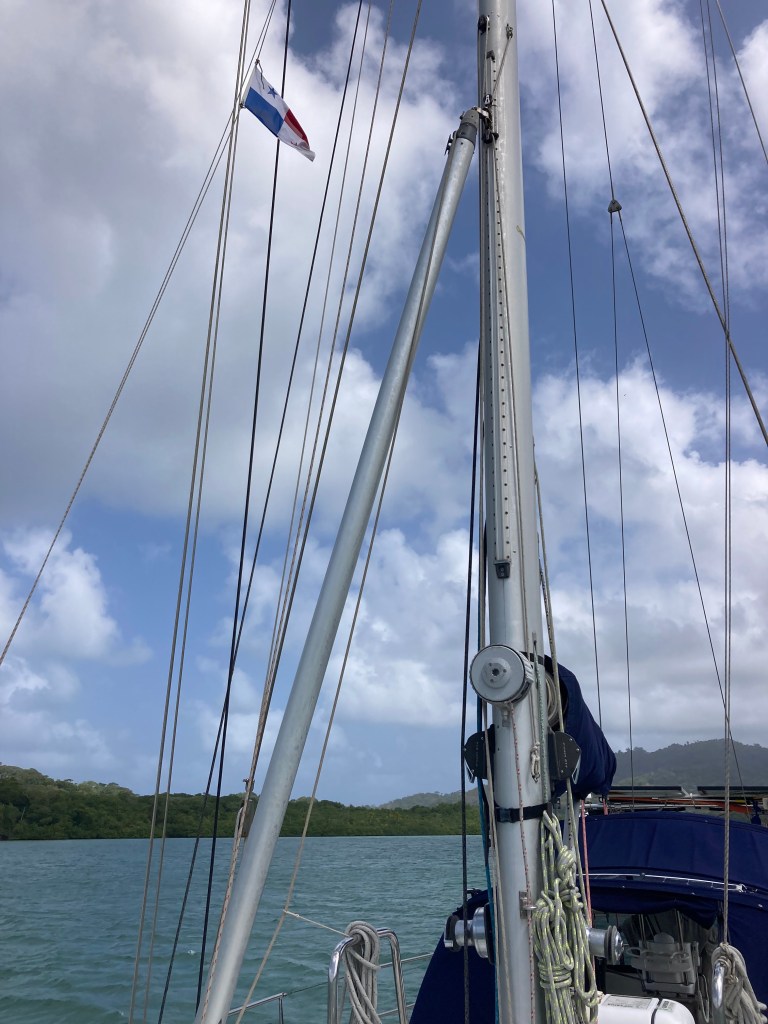
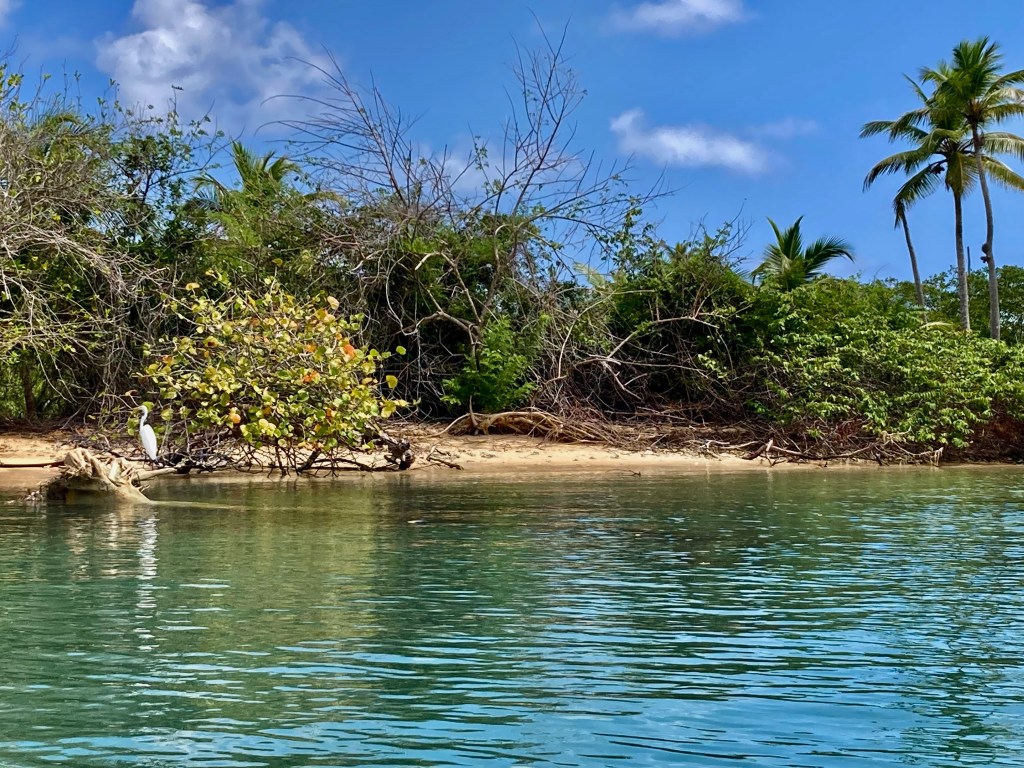
It was an upwind motor sail before we dropped the hook in the most serene anchorage ever: Permé, Panama. One of the small villages of indigenous tribes living in Panama and a few spots in Colombia of the Guna people. The sound of the birds and seeing lush palm trees and green mountains reminded us of our time in Trinidad. The bay was quiet and peaceful, surrounded by land and a protective reef.
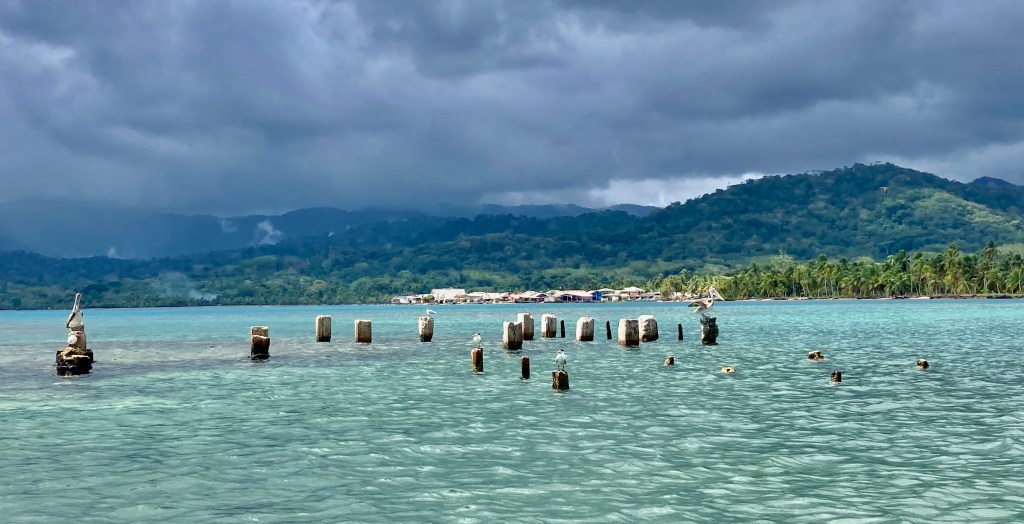
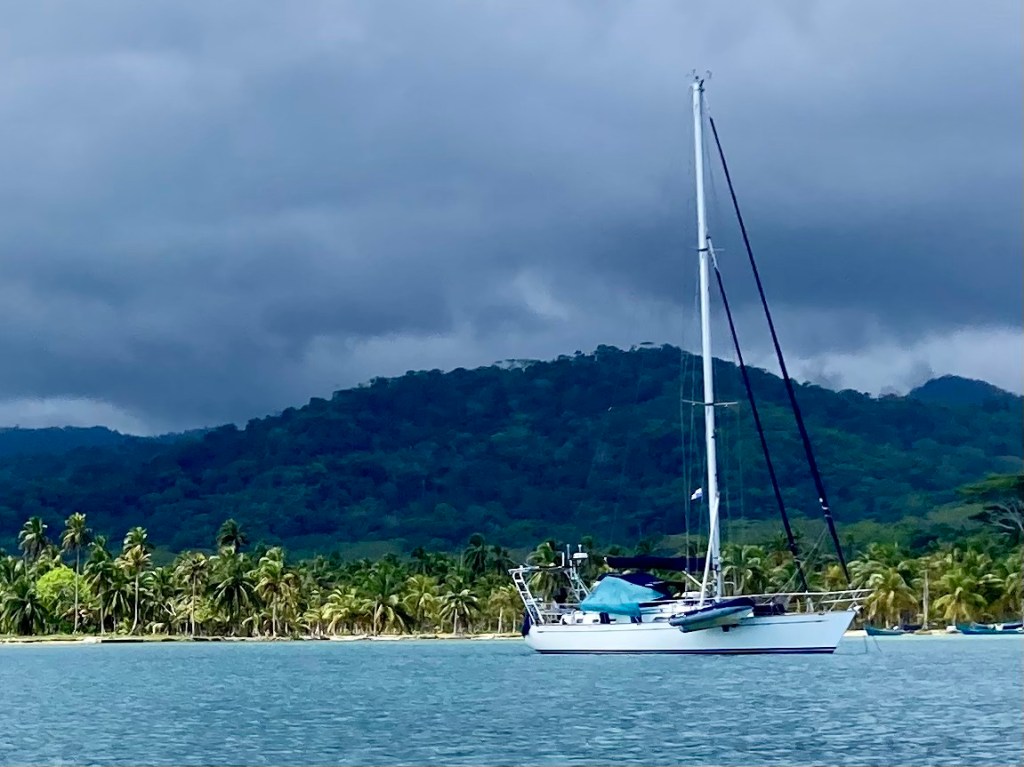
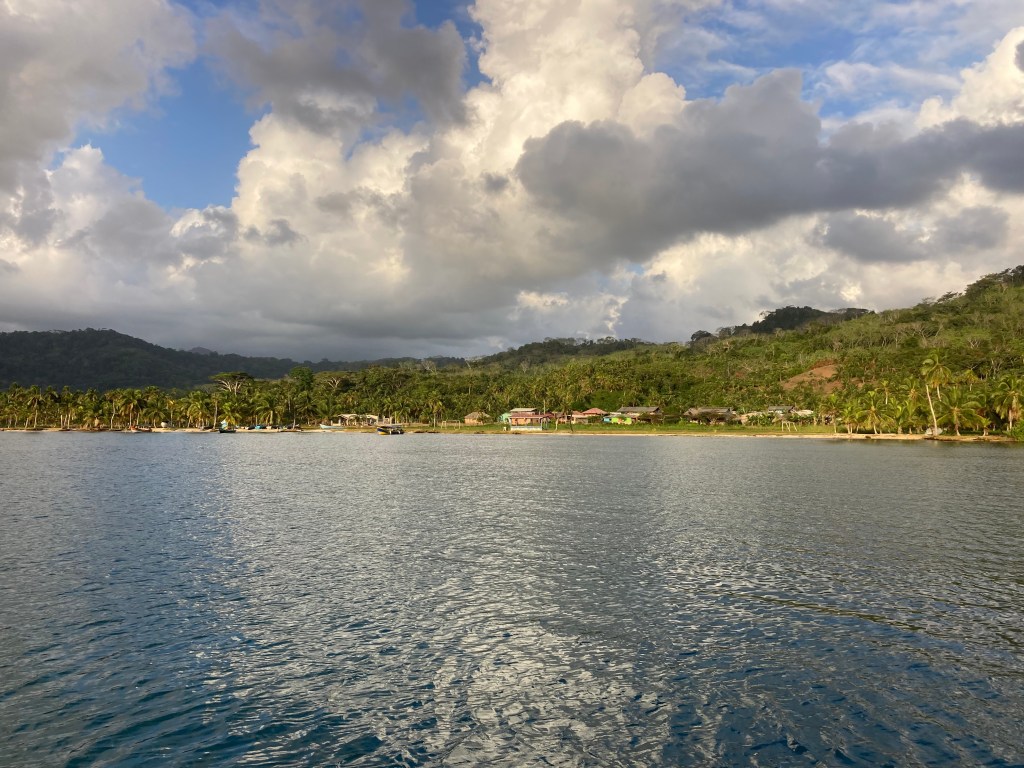
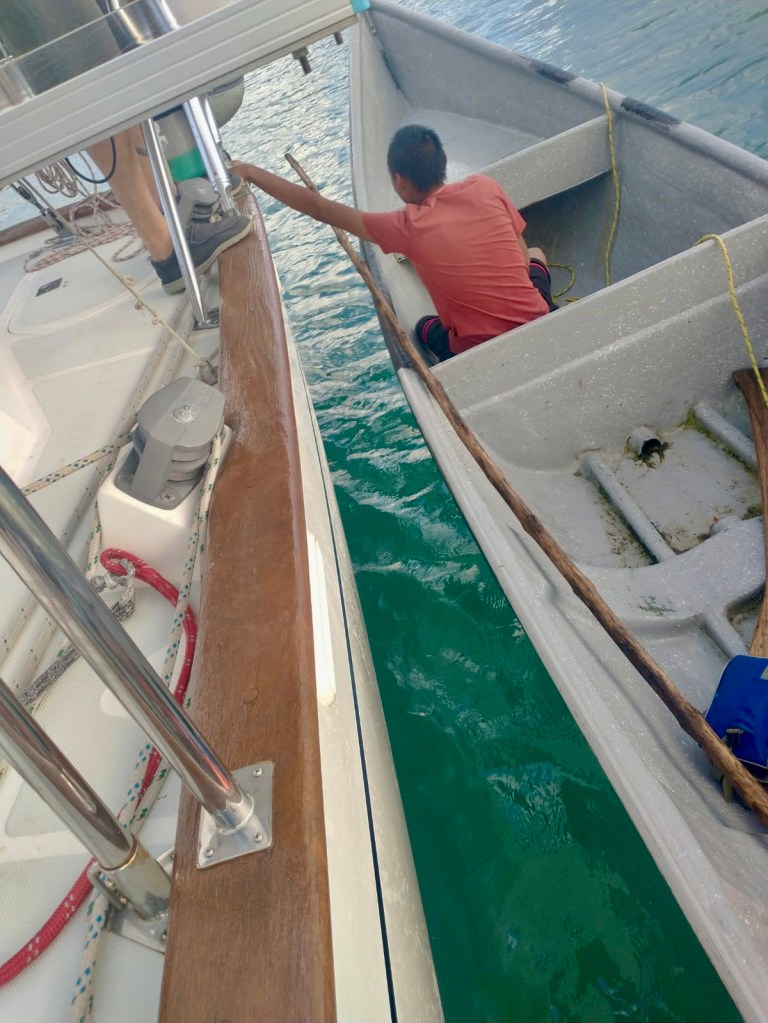
After a few days of rest, we planned to leave and go back to try our luck again – this time with the dinghy on the forward deck and only using the oars, no motor since the swell was predicted to be better, but not by much. As we prepped the boat to leave the following morning, another sailboat arrived in the anchorage. They, too, needed to go to Port Obaldía to clear out. They had been there before with the same issue of going to shore safely. So, they asked if someone from the village could take the four of us in one of their pangas, a large canoe-style boat with a motor, to the port that was eight nautical miles away. This is the primary mode of transportation for the Guna since there are very few roads to these villages. Eric and I had thrown around this idea but decided against it since we knew Oleta could handle the waves. However, we said yes when we got the go-ahead that someone could take us. Why not? The thought of not taking Oleta back sounded so appealing, plus we would go on a fun boat ride!
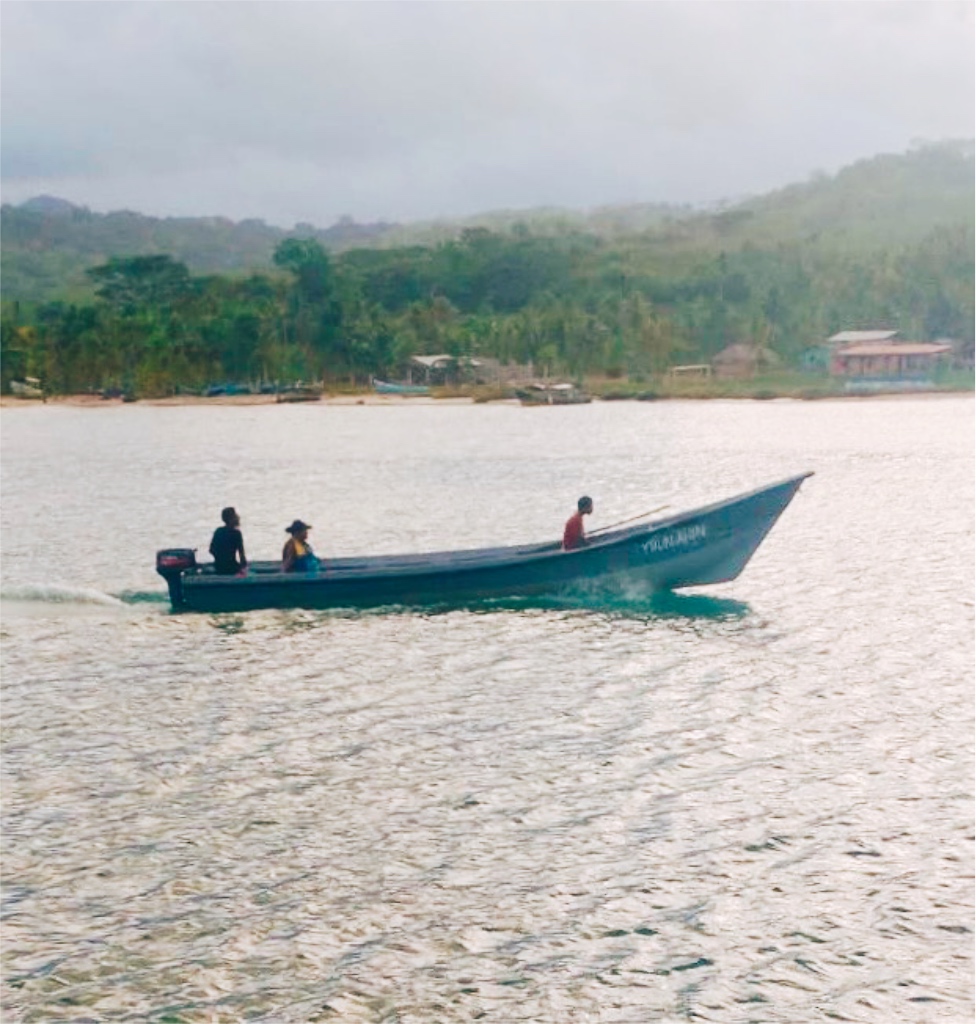
With the decision made to accept the adventure of traveling via small boat on a rougher day instead of leaving the following day when the waves were predicted to calm down, we left around 1 pm after getting the okay. We stopped our chores, and I got all the needed documents and our passports together for the ride. I placed everything in a dry bag with a bit of food, water, and other irrelevant items (in hindsight) to the journey that was about to occur. I knew I was apprehensive about the trip because I sent two quick texts to let my mom and a friend know what we were doing in case we didn’t return to Oleta.
The panga arrived, holding a crew of two with one passenger, all from the village next to Permé. We felt skeptical when Eric and I entered the 15-foot-long by 4-foot-wide vessel made of wood with a high, narrow bow and a low, wide stern. The boat immediately wobbled side to side as we made our way to the bench in front of the driver – no older than eighteen, his assistant was even younger. We sat on either side of Niylisa, the passenger, and motored over to the other sailboat. As the other two cruisers boarded the vessel, it tipped very far to one side, and we all started saying, “Despacio! Despacio!” This means slowly in Spanish. There were some giggles, but overall, I think we were excited. With four foreigners and three locals, we began the boat ride that Eric and I will never forget.
As we moved further away from the calm bay into the open ocean, the waves showed their actual size, ranging from 4-6 feet in height. My heart started to race a bit. On Oleta, this isn’t a lot, depending on the conditions, but seeing these waves at or above eye level in the current boat felt terrifying since we were about four inches from the ocean’s surface. We would lose sight of the horizon as we sunk into the troughs!
Feeling smaller by the minute, this tiny vessel would float onto a wave and slide off it precariously. There were gasps and leaning into the high side because it felt like the boat would flip. Our driver, whom I don’t know his name, watched the waves and maneuvered through them in a way that signaled he had done this before and seemed unbothered. His primary focus was ensuring we didn’t surf too fast down the backside of the waves, causing the panga’s bow to bury – possibly flipping us.
On the other hand, I was trying to calm my nerves and not pass out! I felt a lightheaded pulse through my body. I attempted to calm my breathing and focus on the positive energy that moved us through the water. Niylisa and I became fast friends as I wrapped my arm behind her on the small backrest of our seat, and she used my knee and Eric for balance. We both would let out huge breaths as the boat would ride the gigantic waves into the air – like our breath would somehow calm our descent or keep us from going over.
Many thoughts went through my head during this part of the trip: “Well, this was a terrible idea!” “Can we make it to shore?” (We were about ~3 miles offshore this whole time) “What do I have in my bag that can sustain seven people if a rescue is needed?” I prayed, sent messages to the Universe, and tried to be present on the turbulent ride. I didn’t care about how chafed my butt would be or what I would look like stepping onto shore: my only thought – for us to arrive safely.
Eventually, we could see Port Obaldía, and everyone breathed a sigh of relief. The waves were choppier in the bay, and the conditions seemed rougher than when Oleta was there. This made us question if our idea of sailing back and trying a new method with the dinghy would have worked. Regardless of the answer, we needed to disembark on shore without flipping the boat. The kids backed the panga up, close enough to shore so we could carefully jump off in about two feet of water. We needed to move fast so the boat would not hit us and push into the rough surf. Even though dry ground was only a few feet away, making our way on the uneven, rocky bottom was challenging as the breakers tried to knock us off our feet. Miraculously, we arrived alive! The crew spent the next twenty minutes or so securing the boat offshore – in deeper water, where it rode up and down on the swell, preserving the structure from damage.
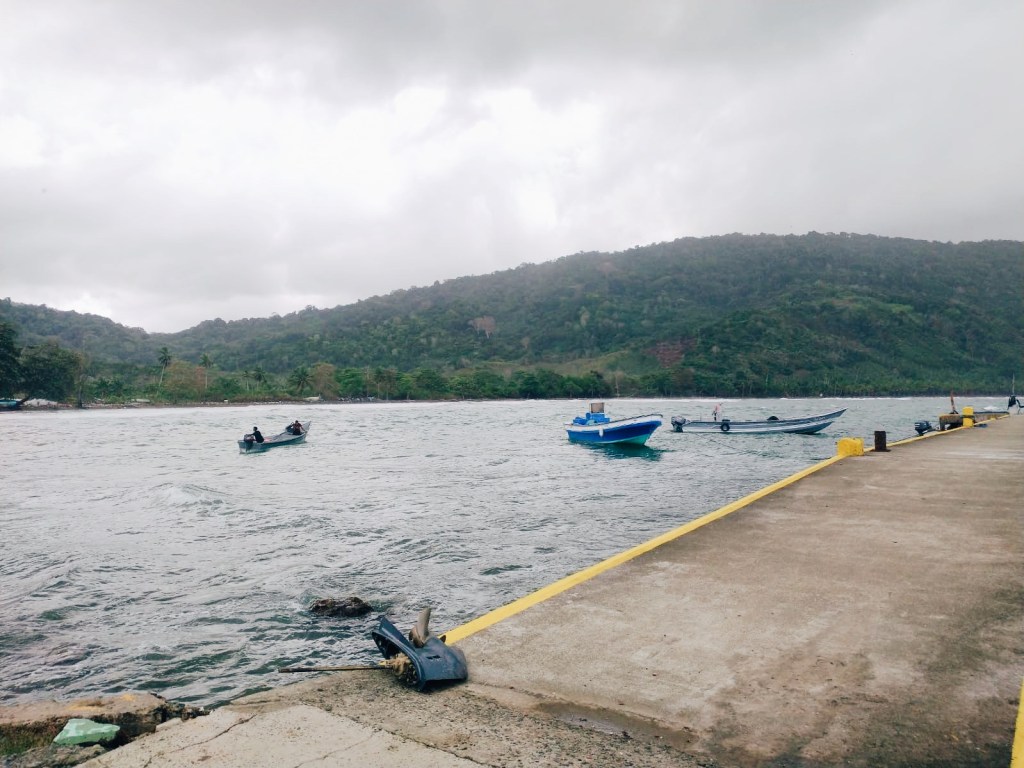
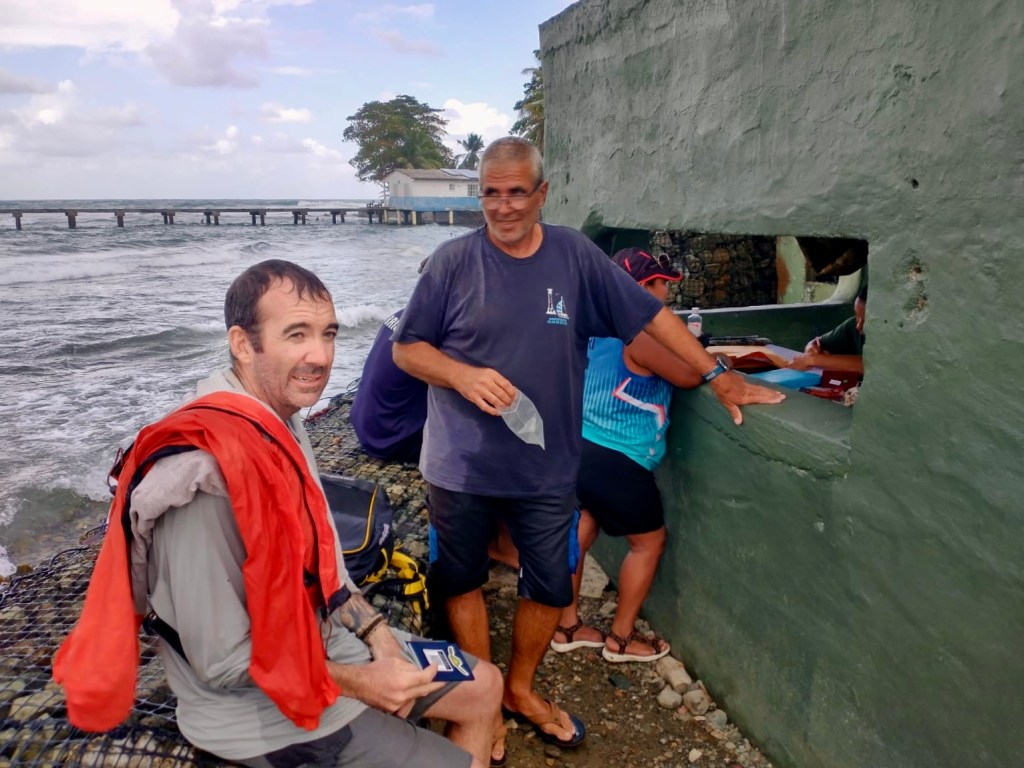
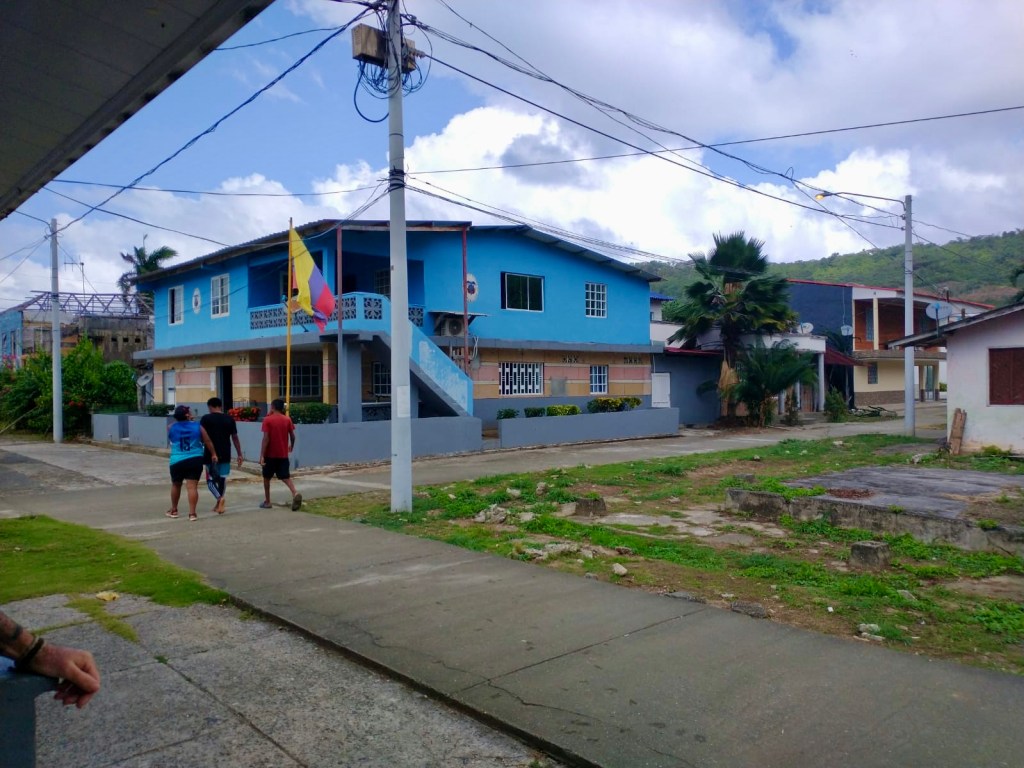
After a mostly uneventful clearance process (for a moment, we were unsure if we would get the needed paperwork since our boat was not in the bay – a story in itself), we walked back to shore to start the return trip. This time, we would head into the wind and seas. The crew retrieved the boat, we found our seats, buckled up our vests, and motored out of the port. As we approached the swells, we could see they were still enormous and looked like giant walls. We would ride up the steep waves and fall hard on the other side. You could hear the propellor from the panga’s engine rev higher as it came out of the water when we jumped them.
With each occurrence, buckets of water would splash into the boat and onto us – stinging our faces with the force. The driver used a cut-up bleach bottle to toss the water overboard every few minutes while still managing to pay attention to the waves. We all became utterly drenched as the “fun” boat ride continued. It felt like we were barely making our way through the massive seas. There was one instance when I thought the boat was going over. Thankfully, it landed with a severe thud, causing the young assistant riding up in the bow to fall to the boat floor, raising a chuckle from the driver.
As we moved further from Obaldía and closer to Permé, the wave size decreased, yet we were still pummeled with seawater that started to chill our bodies. There was still laughter after the soakings because what else could we do?!?
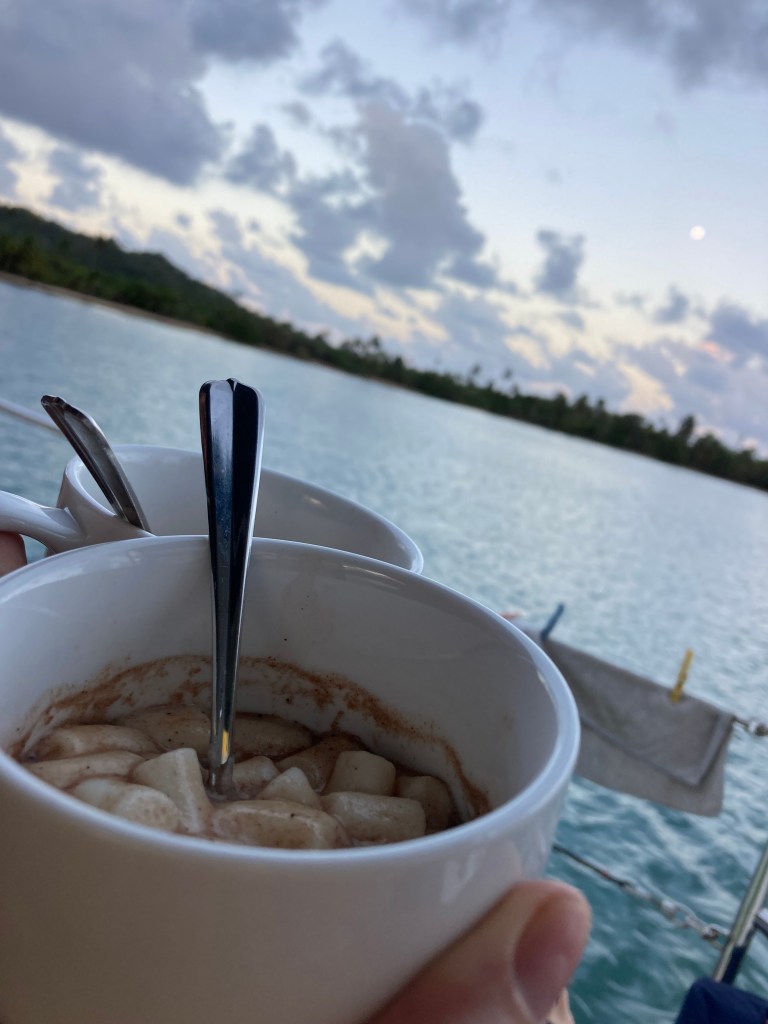
Finally, we could see the masts of our sailboats and knew we were safe. Back on Oleta, we said goodbye to our new amigos, and we slowly fumbled to get inside because our fingers were numb. After a semi-hot shower (thank you, generator), I made two cups of hot chocolate that we savored and warmed our hands as we watched the fading sun behind the puffiest gray clouds.
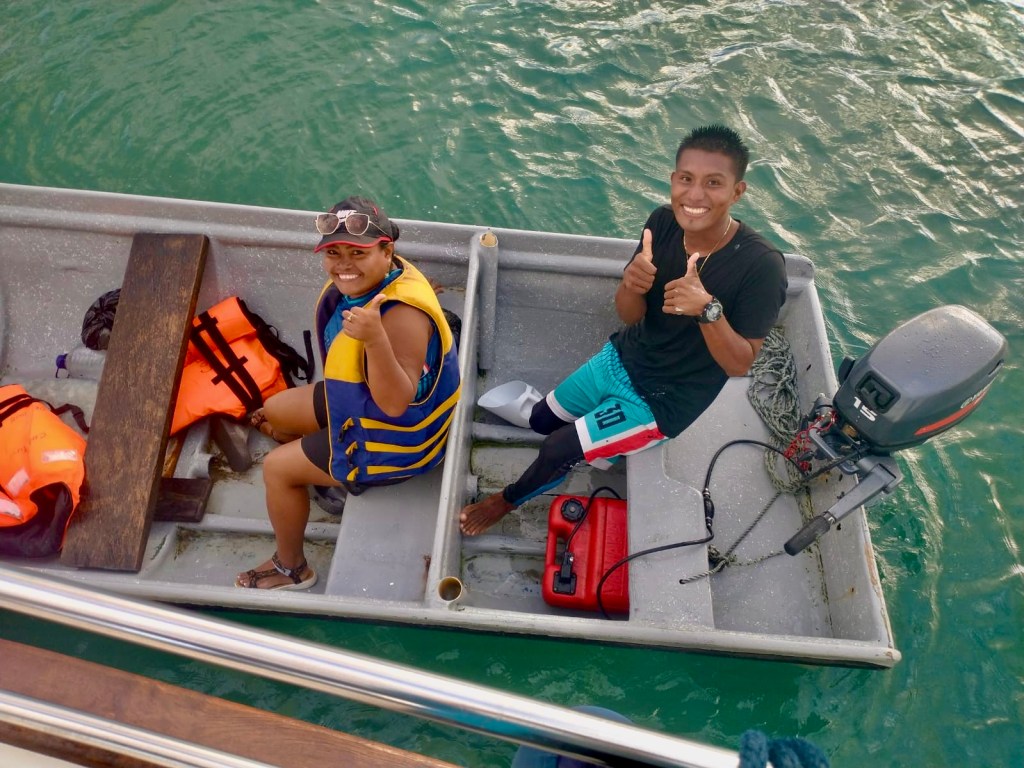
The following day, the other sailboat left the bay. We decided to stay longer – savoring the tranquility and magic of the anchorage. Another sailboat arrived later that morning, and after dropping the hook, they proceeded to have a panga take them to Port Obaldía to check in presumably. On their return, we saw three people who did not have the look of terror on their faces – nor were they drenched. I guess the weather was better a day later.
We enjoyed this experience all for $50 per couple. Was it the wisest decision Eric and I have made? Probably not. Will it be a voyage we ever forget? Nope.
Reflecting on this story, Eric and I live to the best of our capabilities in unknown and difficult situations. It has brought us more connections and understanding about ourselves, others, and our world.
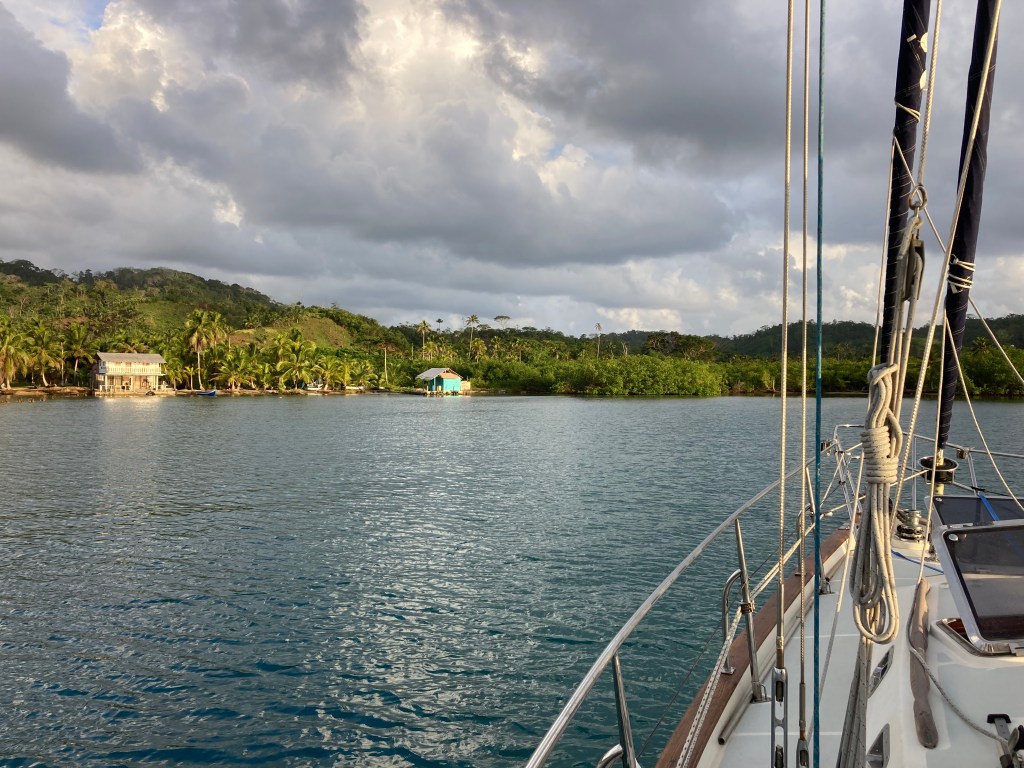
Permé, Panama
Cheers!


 Soulful Mermaid
Leave a comment